How Is The Profession Of Accounting Changing Because Of AI And Smartsourcing?
A lot of things are happening at once, and none of them are slowing down.
Client expectations have shifted. People don’t just want a tax return lodged on time anymore, they want a firm that can tell them what to do next.
AI is handling more of the routine work that used to fill junior staff hours. With more complexities comes compliance risks too. Single Touch Payroll, Payday Super, AML/CTF Tranche 2 … the regulatory pile-on is real.
None of this is really about the technology itself. It’s a workforce story as much as a tech story. Firms are being forced to rethink who does what, how compliance gets reviewed, and where advisory work fits into a day that used to be all lodgement and reconciliation.

What Is The Future Of Accounting In Australia?
Australia’s situation isn’t quite like the US or UK market. We’ve got a smaller population spread across a huge geography, a heavier reliance on SMEs as clients, and a talent shortage that’s arguably sharper here than in comparable economies.
The numbers back that up. The ABS estimates Australia needs over 338,000 accountants to meet demand, while CA ANZ points to a shortfall of around 6,000 by 2030. Meanwhile, enrolments in the Professional Year program dropped from over 7,000 in 2018 to a few hundred by 2024. That’s not a dip, that’s a cliff.
This is why Australian firms have been early adopters of both AI and smartsourcing. The economics make sense.
If you can automate 40% of your compliance workload with AI and hand off another 30% to qualified offshore accountants who work inside your systems, your local team suddenly has room to breathe. The future of accounting in Australia is being built around that gap. Firms that lean into AI and global talent are the ones staying ahead. Firms hoping the shortage resolves itself are the ones losing partners to burnout.
Will AI And Automation Reduce Or Worsen The Accountant Shortage In Australia?
There are two sides to this.
AI takes routine data entry, reconciliations and basic reporting off junior staff, which helps stretch a smaller team further. But it doesn’t create experienced managers or partners out of thin air. Someone still needs to review the work, talk to the client, and make the judgment calls. Recruiters are already saying the real pressure point isn’t entry-level roles anymore; it’s finding people at manager level and above.
That’s exactly where smartsourcing earns its keep. It adds experienced capacity without a twelve-month hiring cycle, which AI on its own can’t do.
How Will AI Affect Accounting In The Future?
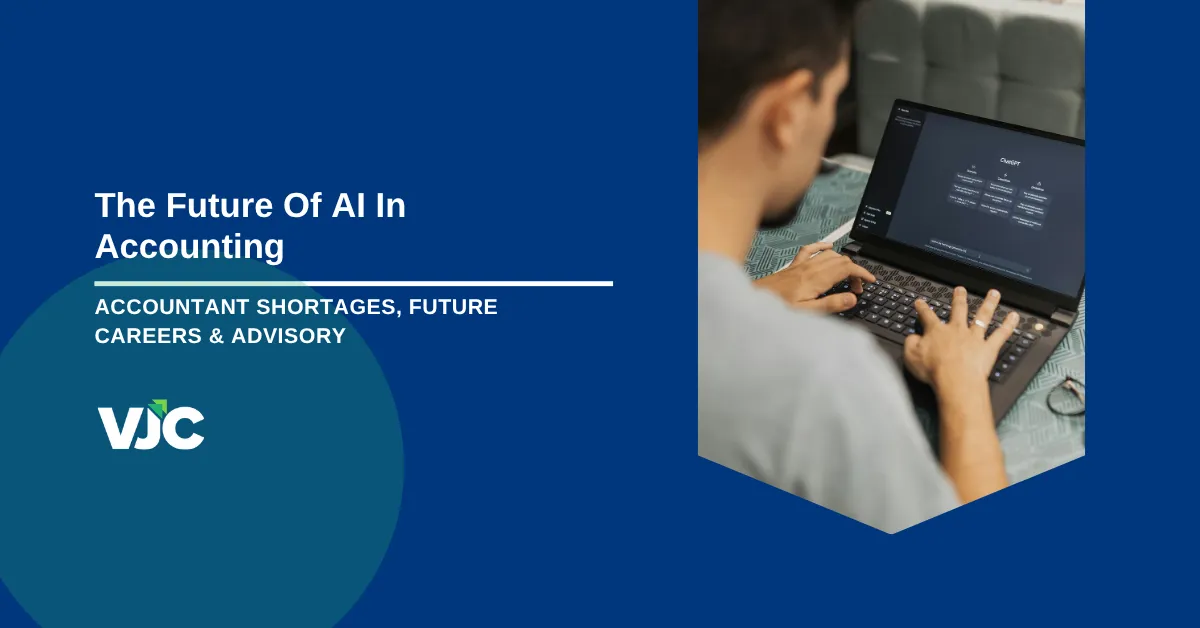
AI and the future of accounting are tied together, but not in the “robots take over” way some headlines suggest. The practical reality is more boring and more useful than that.
Right now, AI can assist us at:
- Pulling data out of invoices, receipts, and bank feeds
- Flagging anomalies in a ledger before a human spots them
- Drafting first-pass reports and summaries
- Answering routine client questions faster than email back and forth
What it’s not good at is understanding a client’s actual situation, weighing up judgment calls, or taking responsibility when something goes wrong. That part stays human.
So, the future of AI in accounting here isn’t full automation…it’s a firm where AI handles repetitive work, and people handle the nuance.

Will AI Replace Accountants In The Future?
Short version: no, but the job is changing shape.
The tasks that made up a junior accountant’s day five years ago, manual reconciliations, basic data entry, chasing documents, are exactly the tasks AI can best support. Those are shrinking.
Remember when cloud accounting software came? People said accountants would be redundant. What actually happened is that accountants started spending more time on advisory work, client strategy, and business growth.
AI is the same pattern, just bigger. It automates more of the groundwork, which means the value of an accountant shifts toward communication, critical thinking, and domain expertise.
Is Accounting Still A Good Career Despite AI?
Yes, arguably more so. With a shortage this deep, demand for accountants isn’t going anywhere. But the skill set is shifting.
The future of accountancy will reward people who can combine technical knowledge with business acumen and technology skills. Chartered accountants who can interpret AI-generated reports, advise clients on strategy, and communicate clearly will be in strong demand. The career path is changing, not disappearing.
What Will The Accounting Firm Of The Future Look Like?
Picture a firm where the compliance engine room runs quietly in the background, powered by AI and offshore support, while the partners and senior staff spend their time in front of clients. That’s roughly where things are heading.
The future of accounting industry looks less like a pyramid of juniors doing grunt work under a few partners, and more like a leaner core team supported by a mix of automation and smartsourced talent. Firms that get this structure right free up their best people for the work that actually grows the practice.
What Are The Biggest AI Trends Transforming Australian Accounting?
A few trends are showing up across every industry report worth reading:
- Increased adoption of AI – According to a Broadridge financial services study, AI adoption in Australia leads global benchmarks, sitting at 67% locally versus 57% globally.
- Automated data extraction and coding – Invoices, bank statements, and receipts are getting processed in seconds rather than hours.
- Sustainability & ESG – Increased use of AI to analyse climate reporting, carbon data and environmental records.
- Predictive analytics for cash flow and forecasting – Giving clients forward-looking insights rather than just historical reports.
- Client communication tools – AI drafting email responses and meeting summaries, reviewed by the accountant before sending.
Why Are Human Judgment And Responsible AI More Important Than Ever?
Here is the thing about AI in accounting: it is very good at being wrong in ways that look plausible.
An AI tool might categorise a personal expense as a business deduction with complete confidence. If nobody reviews it, that mistake ends up in a tax return. And then you know the drill of penalties and notices.
Recently, KPMG Australia reportedly fined one of its partners $10,000 after the partner used AI to cheat on an internal AI-related assessment. The firm also said that more than two dozen employees had been caught using AI in similar circumstances since July. This was not a case of AI independently producing a bad answer. It was a reminder that professional accountability still rests with people
This is exactly why the Tax Practitioners Board has been vocal on this. As per the latest 2026 guidance, competence, confidentiality, and reasonable care still sit with the person signing off, not the AI tool that helped draft it.
That means governance is no longer just a compliance exercise. It is part of every accountant’s daily workflow. And honestly, that’s not a bad thing. Trust, clear communication and sound judgment are the things clients actually pay for. AI can not replicate that, and it’s becoming the real point of difference between firms.

Which Accounting Tasks Will AI Automate And Which Will Stay Human?
Here is a practical breakdown of where AI adds value and where humans are still essential:
| Tasks AI Handles Well | Tasks That Need Humans |
|---|---|
| Data extraction from invoices and receipts | Reviewing AI output for accuracy |
| Bank reconciliation and transaction matching | Complex tax planning and strategy |
| Standard BAS and GST preparation | Client advisory conversations |
| Payroll processing and compliance reporting | Interpreting new legislation |
| Document generation and templates | Final review and sign-off |
Remember, over automation is going to cost you in the long run. If AI does all the foundational work, how do graduates learn the basics? Also, it is about creating a skills gap where senior staff retire, and there is nobody ready to replace them. The smart approach is to use AI to speed up training, not skip it.
What Is The AI Accounting Trap And Is There A Better Alternative To Increase Work Efficiency??
Here’s what most CEOs do these days. They invest in an AI tool, automate a bunch of compliance work, and expect everything to run itself.
For a few weeks, everything looks faster.
Then the partner starts reviewing AI-generated work. The junior team stops learning because AI does the first draft. Someone has to double-check every reconciliation, workpaper and tax file. Suddenly, the bottleneck didn’t disappear. It just moved from “not enough hands” to “not enough judgment,” which is a harder problem to solve with software.
And that is exactly what we call the AI accounting trap.
A better strategy to deal with this is Smartsourcing. But what exactly is that? Smartsourcing is more than traditional outsourcing where you offload the routine work. It is a structured way of adding qualified accounting staff who work as part of your team, using your systems and following your processes.
The goal is not just cost reduction. It is to increase capacity so work gets completed on time and standards stay consistent.
See, AI is genuinely good at volume. But it’s not good at knowing your client’s history (aka it has context blindness), questioning unusual transactions or picking up the commercial context behind a number.
That’s where people still matter. Today, a lot of forward-thinking Australian firms combine AI with offshore professional support. It’s like the perfect balance of speed + human oversight. The technology handles routine accounting work. Meanwhile, experienced accountants review the output, investigate exceptions, and keep working like your internal team.
P.S. Talk to us if you want to see what that looks like on a real file before you commit to anything.

Which AI Accounting Tools Should Firms Consider In 2026?
Honestly, the names are many, but the market moves fast enough that any list goes stale within months. So, rather than listing every product, here is what to actually evaluate when choosing one:
- Integration – Does the tool connect to your existing stack? Or does it create another silo?
- Security and data residency – Where is client data stored? Does the vendor meet Australian privacy requirements? This matters more than most firms realise.
- Actual productivity gain – Not the vendor’s marketing claims. Ask other Australian firms what they are actually saving in hours per week.
- Scalability – will it still make sense at double your current client volume
- Training and support – Will your team actually use it? A tool that sits unused because nobody knows how to set it up is a waste of money.
How Should Accounting Firms Implement AI Successfully?
AI works best when it solves one problem at a time. Don’t try to automate your entire practice overnight. Here’s how you use artificial intelligence in accountancy:
1. Audit your current process
Start with tasks that take hours but follow the same process every time. For example:
- Summarising bank statements with hundreds of transactions before reconciliation.
- Extracting data from supplier invoices and receipts.
- Categorising expenses for bookkeeping.
- Drafting meeting notes or client follow-up emails.
2. Choose software built for accounting
Now see how AI can help automate such processes. Remember to always choose the software that fits your workflow, not the other way around. Make sure it has strong security and clear privacy policies, as you are feeding client-sensitive data.
3. Train your team
AI is a productivity tool, not a replacement for professional judgement.
Your team should know when AI can speed up work and when a human review is essential, especially for tax advice, financial statements, and compliance decisions.
4. Set a review cadence
Check what’s working and what’s missing. AI can also miss context or categorise transactions incorrectly. So, review thoroughly before sending it to a client.
5. Improve as you go
Start with one workflow, measure the time saved and gather feedback from your team. Friction will come. But once you get a hold of the process, expand AI into other areas of the practice.
What Are The Pros And Cons Of AI In Accounting?
If we look at the future of accounting in Australia or anywhere else in the world, it’s not about AI replacing humans. It’s about giving them more time to focus on advisory work, complex decisions and client relationships.
Below is a pros and cons list for you to understand better:
| Pros | Cons |
|---|---|
| Automates repetitive tasks like data entry and reconciliations | AI can produce inaccurate results if data is incomplete or incorrect |
| Speeds up reporting and document processing | Still requires human review for compliance and judgement |
| Helps identify unusual transactions and potential risks | Privacy and data security must be carefully managed |
| Improves productivity and reduces manual errors | Staff need training to use AI tools effectively |
Frequently Asked Questions About EOFY Checklist
Will AI Replace Accountants In The Future?
No. AI is here to automate and make your work easier and more manageable. It is not qualified enough to replace chartered accountants.
What Is The Role Of Smartsourcing In Accounting?
Smartsourcing gives firms access to qualified accountants who work inside your systems and follow your procedures. It fills capacity gaps so your local team can focus on advisory and client-facing work. At VJC Partners, we smartsource accounting work for Australian firms. That means qualified accountants, working inside your software, to your standards. If you would like to see how we work, fill out the enquiry form and our team will reach out.
How Can Accounting Firms Prepare For The Future Of AI?
Accounting firms can prepare by automating repetitive tasks, training staff to use AI responsibly, maintaining human review, and combining technology with skilled accounting support.